
You already bought the dish. Now comes the part nobody warns you about — the accessory shelf is a mess of near-identical listings, and half of them won’t survive a single road trip.
Picking the best Starlink accessories isn’t about grabbing whatever ranks first. It’s about knowing which features actually protect your setup and which ones are just filler on a product page. This guide walks through what to check before you add anything to your cart.
Why Not All Starlink Accessories Are Worth Your Money
A lot of Starlink dish accessories are built for the photo, not the trip. Thin fabric, unrated zippers, foam that looks thick but compresses under a light squeeze — none of it shows up until the dish is already scratched or the mount has snapped in the wind.
The good news: once you know what to look for, spotting the difference takes about thirty seconds per listing.
Start With What You Actually Need
Before comparing products, get clear on how you’re actually using the setup. Your priorities change depending on the scenario.
Storage & Transport
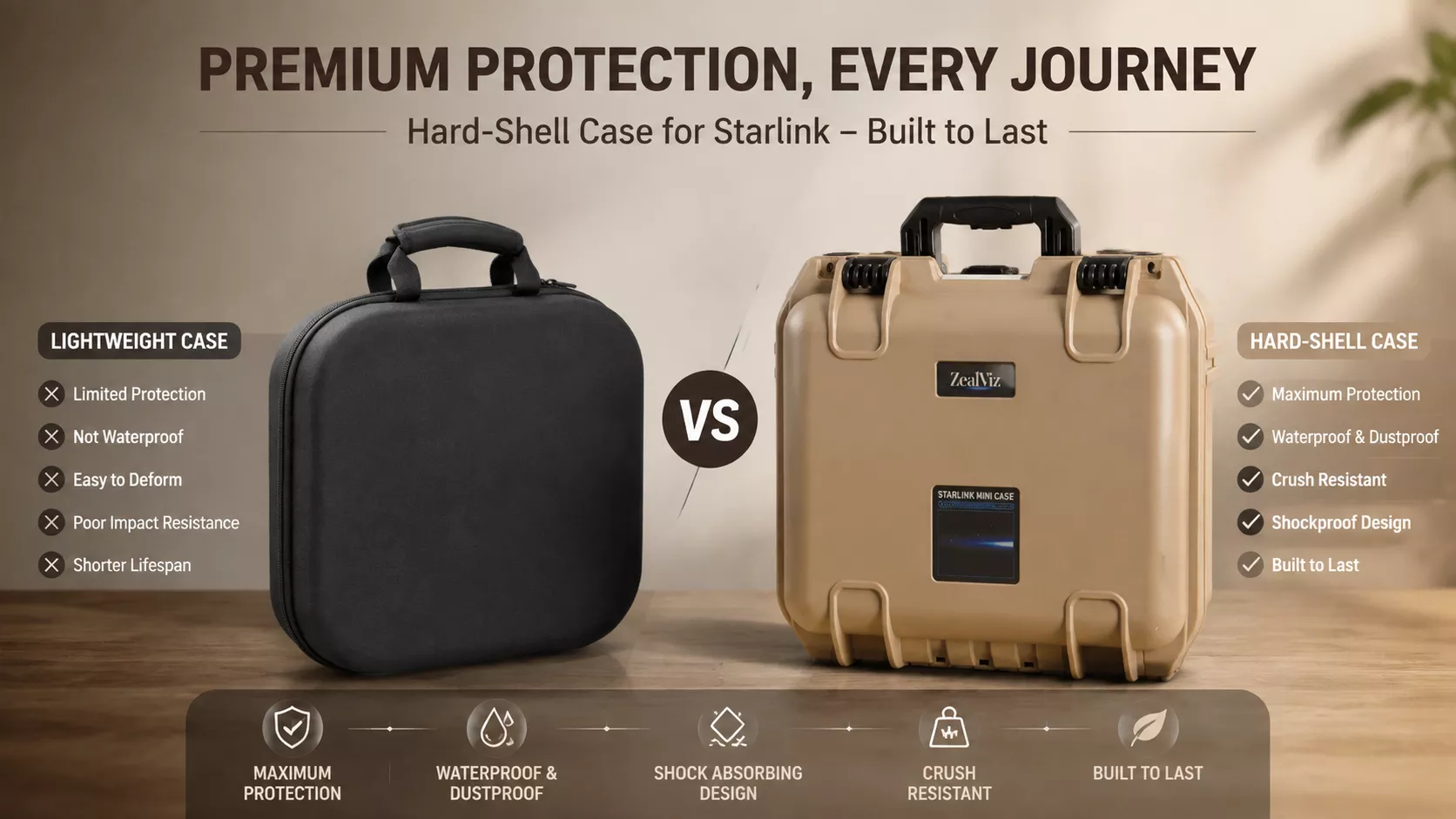
If the dish rides in a truck bed, trunk, or camper storage between uses, a hard-shell or heavily padded case matters more than anything else. Look for:
- Rigid or semi-rigid shell construction
- Interior slots or dividers that stop the dish from shifting
- A carry handle rated for the actual weight, not just stitched on
Mounting
If you’re setting up daily at a campsite or job site, mount speed and stability matter more than storage.
- Tripod mounts for flat, unobstructed ground
- Pole or roof mounts for RVs and permanent setups
- Quick-release hardware that doesn’t need tools every time
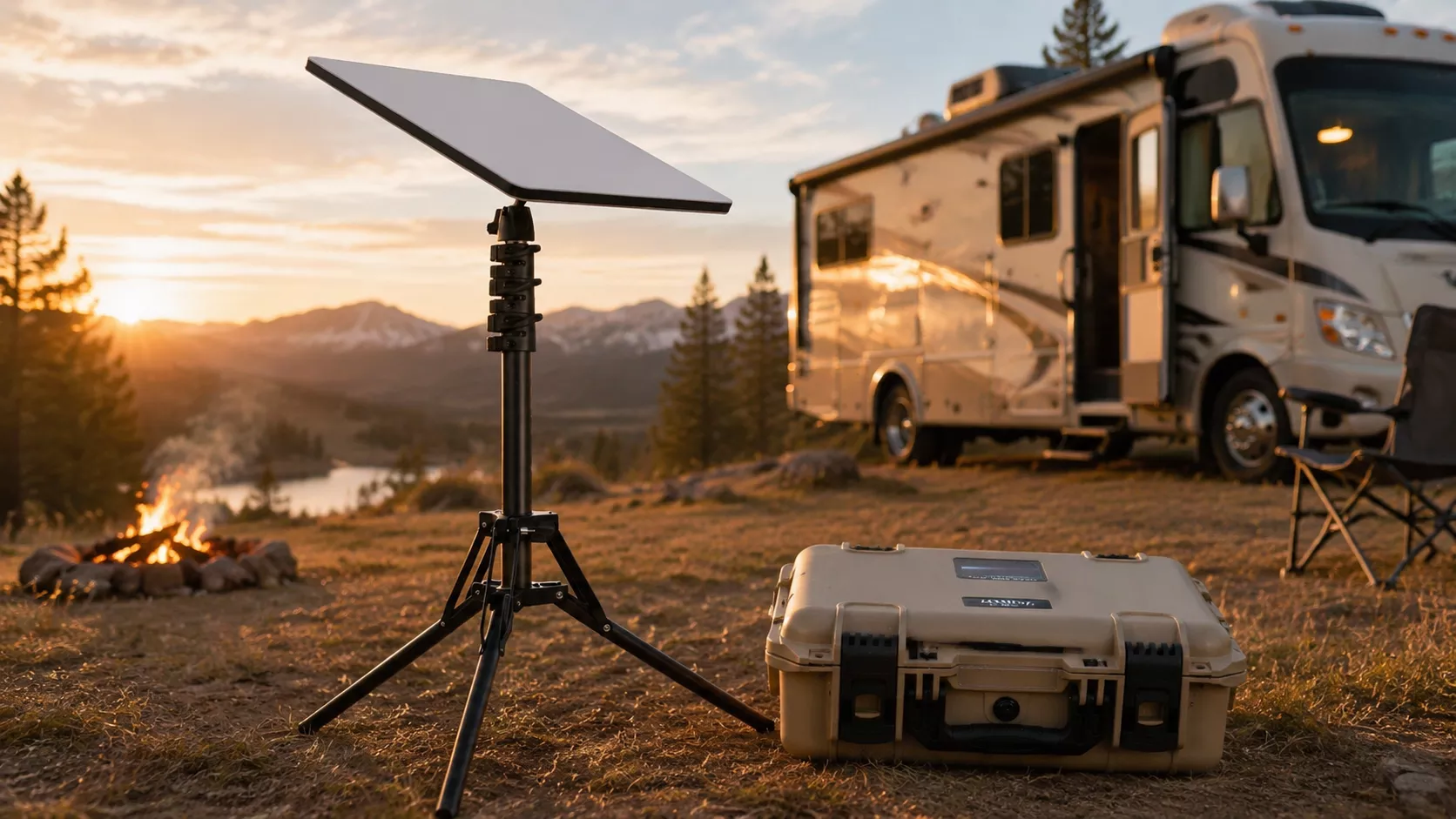
Weather & Impact Protection
For anyone in variable climates — rain, dust, extreme sun — protection-grade materials aren’t optional. This is where most of the Starlink gear essentials people skip end up costing them later.
Key Features to Check Before Adding to Cart
Run through this list on any listing before you buy:
- Material rating — is there an actual IP water-resistance number, or just the word “weatherproof”?
- Foam density — described as high-density or shock-absorbing, not just “padded”
- Hardware quality — named zipper and buckle brands, reinforced stitching at stress points
- Fit accuracy — designed for the specific Starlink dish generation you own
- Warranty or return coverage — a brand that stands behind its materials will say so clearly
Skip any listing that’s vague on more than one of these.
Common Mistakes First-Time Buyers Make
- Buying by price alone. The cheapest case usually fails first, then costs more in a replacement dish.
- Ignoring dish compatibility. Standard and High Performance Starlink dishes aren’t the same shape — check before ordering.
- Assuming “carry bag” means “protective case.” Some products are built for convenience, not impact protection. Know which one you’re actually buying.
- Skipping the mount entirely. A dish set flat on the ground loses signal stability fast, especially in wind or uneven terrain.
A Quick Buyer’s Checklist
Before you check out, confirm:
- The case or mount fits your specific Starlink dish model
- The material has a stated water-resistance rating
- The foam or padding is described in specific terms, not just “protective”
- Hardware (zippers, buckles, straps) is rated for repeated outdoor use
- The seller has a clear return policy in case the fit or build isn’t right
If a product page can’t answer these, the listing usually isn’t ready to answer them either.
After You Buy: What Good Support Looks Like
The accessory itself is only half the decision. What happens after checkout matters just as much.
Once your order ships, being able to track it in real time takes the guesswork out of trip planning — check your shipment status any time through the order tracking page instead of waiting on an email. And if the fit isn’t quite right for your dish model, a straightforward return process should be the fallback, not a hassle.
If you’re unsure which mount or case matches your specific setup, reaching out before you order is usually faster than guessing — the contact page is there for exactly that.
Buy Once, Buy Right
The best Starlink accessories aren’t the ones with the most features listed. They’re the ones built from materials that actually match your use case — rated water resistance, real impact protection, hardware that survives repeated setup and teardown.
Check the specs, not just the star rating. Your dish will hold up a lot longer for it.