
Your Starlink dish isn’t cheap. Neither is the trip you packed it for.
So why do so many people protect a $500+ piece of satellite hardware with a $15 nylon sleeve that tears at the first zipper snag? A weatherproof Starlink case isn’t a nice-to-have. It’s the difference between a dish that survives five years of overlanding and one that cracks in a parking lot.
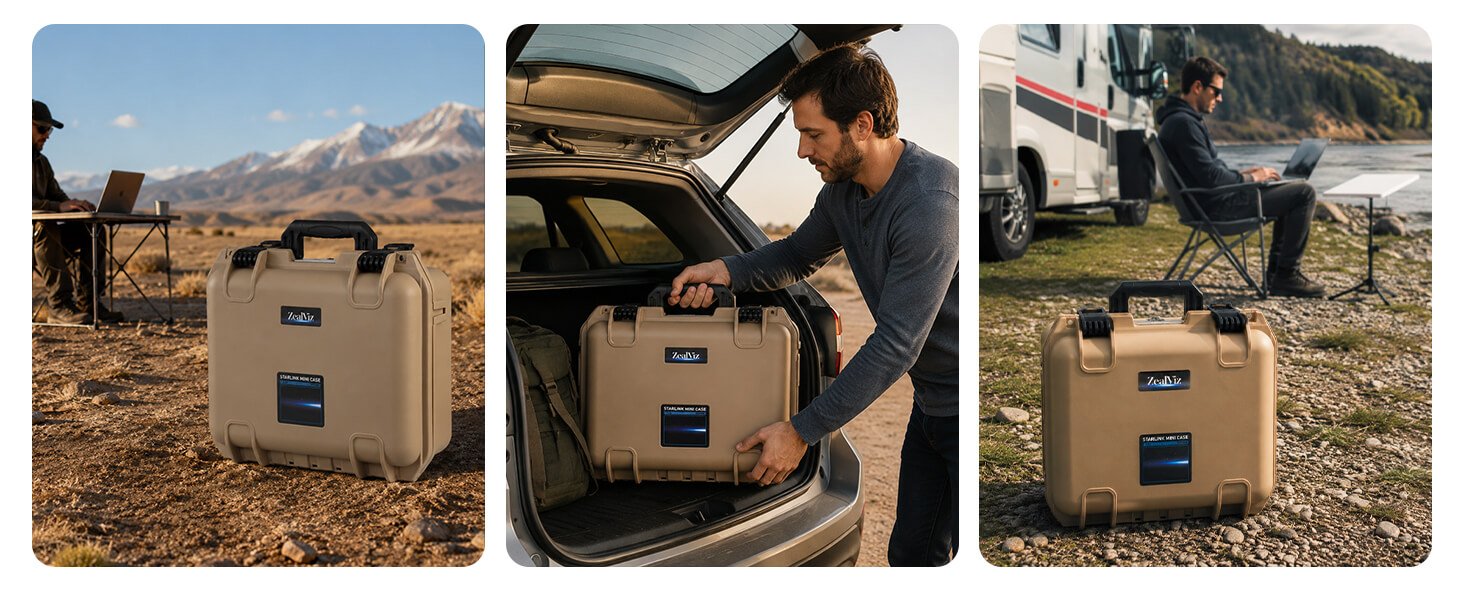
This guide breaks down what actually makes an accessory rugged, what “weatherproof” should mean on a spec sheet, and how to spot an impact resistant antenna case before you buy — not after your dish takes a hit.
The Real Cost of a Cheap Case
Most damage doesn’t happen during use. It happens in transit.
A dish riding loose in a truck bed, a bag tossed on gravel, a support arm flexing against a hard edge in the trunk — these are the moments that end a Starlink kit early. Low-grade fabric and thin foam don’t fail dramatically. They fail quietly, one scuff and one soft impact at a time, until the day they don’t hold.
If you camp, van-life, or work off-grid, your gear takes this kind of abuse constantly. The case is doing more work than the dish itself.
What “Weatherproof” Actually Means for a Starlink Case
“Weatherproof” gets printed on a lot of packaging. Not all of it earns the word.
Water Resistance Ratings You Should Look For
A real weatherproof rating comes from an IP (Ingress Protection) number, not a marketing line. For a satellite dish case, you want:
- IPX4 or higher — splash resistance for rain and dew
- IPX6 — protection against heavy rain and pressurized water, ideal for storms and washdowns
- Sealed zippers or overlapping flaps, since most water gets in through the seams, not the fabric
If a listing doesn’t mention an IP rating at all, assume it’s water-resistant in name only.
Temperature and UV Resistance
Satellite gear lives outdoors, often in direct sun for hours. Materials that aren’t UV-stabilized go brittle and fade within a season. Look for:
- Polyester or nylon blends rated for outdoor UV exposure
- Stitching that won’t degrade under heat cycling
- A shell that stays flexible in cold weather instead of cracking
Impact Protection: Why Foam Density and Shell Design Matter
Waterproofing keeps moisture out. Foam keeps the dish intact.
Two cases can look identical from the outside and behave completely differently on the inside. Foam density is the variable most buyers never check, and it’s the one that matters most for rugged satellite accessories.
- Low-density foam compresses under light pressure and offers almost no shock absorption
- High-density EVA foam holds its shape and distributes impact force across the shell instead of transferring it straight to the dish
- Custom-cut interior slots keep the antenna from shifting during transport, which is where most cracked mounts actually happen
A hard-shell exterior paired with dense internal foam is the combination worth paying for. Soft fabric alone, no matter how thick it looks, isn’t structural protection.
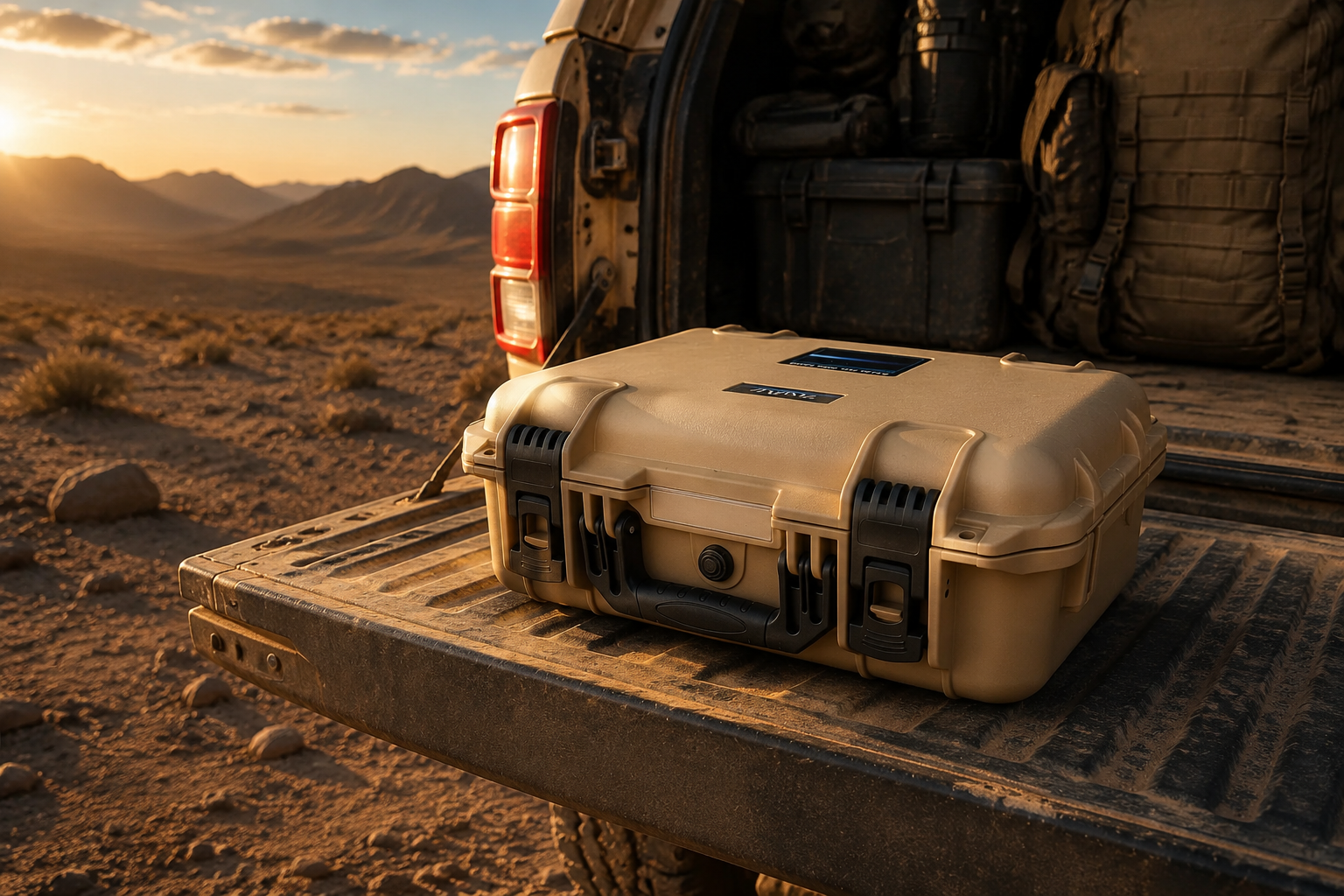
Materials Breakdown: What Rugged Satellite Accessories Are Actually Made Of
Here’s what separates a genuinely durable case from one built to look durable in a product photo.
Shell materials
- 1680D ballistic nylon or ABS hard-shell for structural rigidity
- Reinforced corners where drops and impacts concentrate
Hardware
- Metal buckles and YKK-grade zippers, not plastic clips that snap in cold weather
- Double-stitched load points on any strap or handle
Interior
- Closed-cell foam that doesn’t absorb water if the shell is ever breached
- Anti-slip lining to keep the dish from sliding during transit
This is the same standard Zealviz applies across its Starlink accessory line — high-strength, weather-sealed materials built for repeated field use, not a single camping trip.
How to Evaluate an Impact Resistant Antenna Case Before You Buy
Before checking out, run through this short list:
- Does it list an actual IP rating, or just the word “waterproof”?
- Is the foam described as high-density or shock-absorbing, not just “padded”?
- Are the zippers and buckles named brands, or unspecified hardware?
- Does the case have reinforced corners or edges?
- Is there a documented return or warranty policy behind the product?
That last point matters more than it seems. A brand confident in its materials will stand behind them. Reading through Zealviz’s refund and returns policy before purchase is a quick way to confirm that confidence is backed by an actual guarantee, not just copy on a product page.
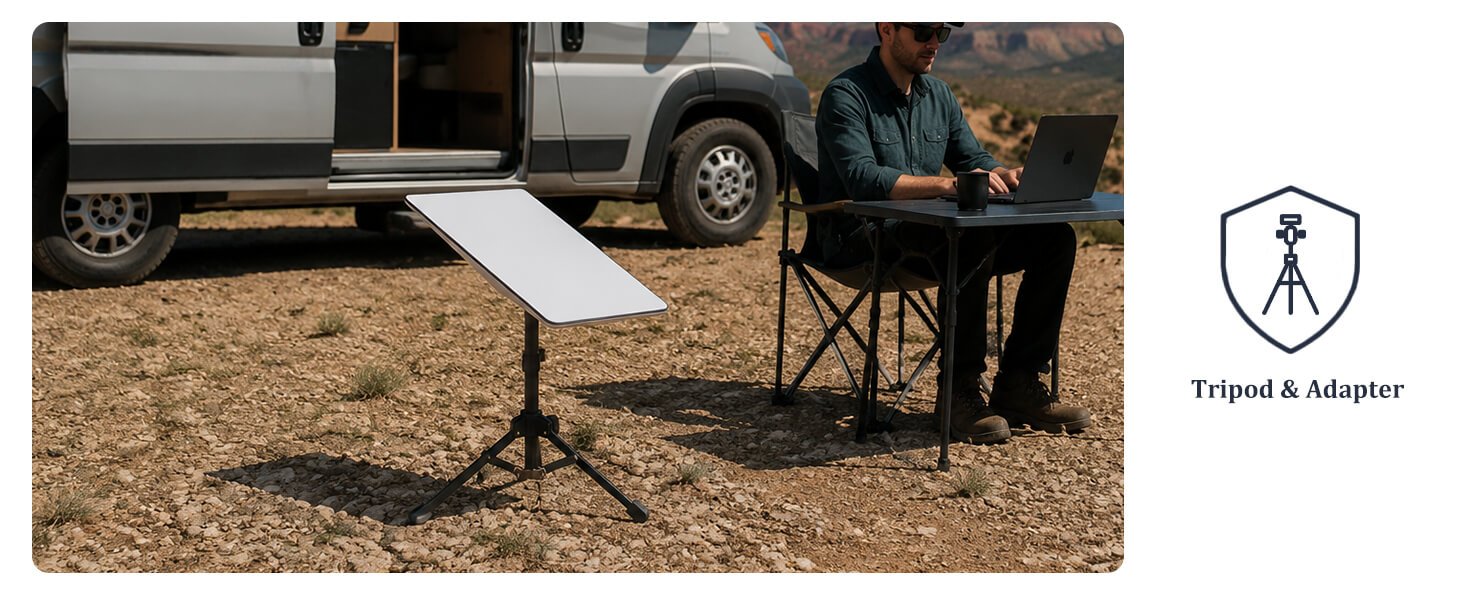
Built for the Field, Not the Shelf
A satellite dish is only as reliable as the gear protecting it in transit. The right case isn’t the one with the most padding in a photo — it’s the one with a rated shell, dense foam, and hardware that holds up after the twentieth trip, not just the first.
Zealviz designs its Starlink accessories around this exact standard: weather-sealed materials, reinforced structure, and field-tested durability for RV, overlanding, and off-grid setups. You can read more about the material and engineering approach behind the lineup on the About Us page, and check current delivery timelines on the shipping policy page before your next trip.
Gear that’s built right doesn’t need to be babied. It just needs to be trusted — and that trust starts with the material, not the marketing.