
The ability to access high-speed, low-latency internet from the most remote corners of the globe has fundamentally changed the way we travel, work, and live. Whether you are a dedicated digital nomad running a business from a converted sprinter van, an overlanding enthusiast exploring off-grid trails, or simply someone who wants reliable connectivity at a remote family cabin, satellite internet has bridged the ultimate digital divide. However, this incredible technology relies on a piece of highly advanced hardware that is exposed to the elements and the rigors of travel. To ensure your connection remains flawless, investing in premium starlink antenna accessories is not just an option—it is an absolute necessity.
Your satellite dish is a marvel of modern engineering, packed with delicate phased-array antennas and sensitive internal components. Tossing it haphazardly into the back of a truck, stuffing it into a soft backpack, or mounting it with makeshift hardware is a recipe for disaster. A single drop, a sudden rainstorm, or an unexpected gust of wind can easily damage the unit, leaving you disconnected when you need it most. In this comprehensive guide, we will explore the essential accessories you need to protect, carry, and securely mount your setup, ensuring that your gateway to the internet remains safe, secure, and fully operational no matter where your adventures take you.
Why Specialized Protection is Crucial for Your Satellite Gear
Before we dive into the specific accessories, it is important to understand why standard luggage or generic storage boxes simply do not cut it. The internal components of your dish are designed to track satellites moving at incredible speeds in low Earth orbit. This requires precise alignment and a pristine surface. When you are traveling over corrugated dirt roads, experiencing the turbulence of a flight, or facing extreme weather conditions, the physical stress on your equipment is immense.
Moisture, dust, and blunt impact are the three primary enemies of your connectivity. A high-quality protective solution must account for all three. When evaluating protective gear, professionals often look at the Ingress Protection (IP) rating system, which standardizes the measurement of how well an enclosure blocks out dust and water. Your goal should be to find storage and transport solutions that offer robust environmental sealing alongside military-grade impact resistance. Without this level of protection, micro-fractures can develop in the casing of your dish, leading to eventual hardware failure.
Top Priority: Carrying and Protecting Your Hardware in Transit
The most vulnerable time for your satellite dish is when it is powered down and in transit. Whether you are moving it from your garage to your RV, or flying across the country for a remote work assignment, the way you pack your dish dictates its lifespan. Soft bags offer zero crush protection, and generic plastic totes allow the equipment to violently bounce around during transport.
This is where a dedicated, custom-fitted hard case becomes the most important investment you will make. For users of compact setups, the Zealviz Starlink Mini Case represents the gold standard in equipment transportation. Designed specifically for the dimensions of the hardware, this case eliminates the guesswork of packing. The exterior is constructed from high-impact polymer that can withstand the weight of other heavy gear being stacked on top of it, while the heavy-duty latches ensure the case stays firmly shut even if it takes a tumble down a rocky embankment.
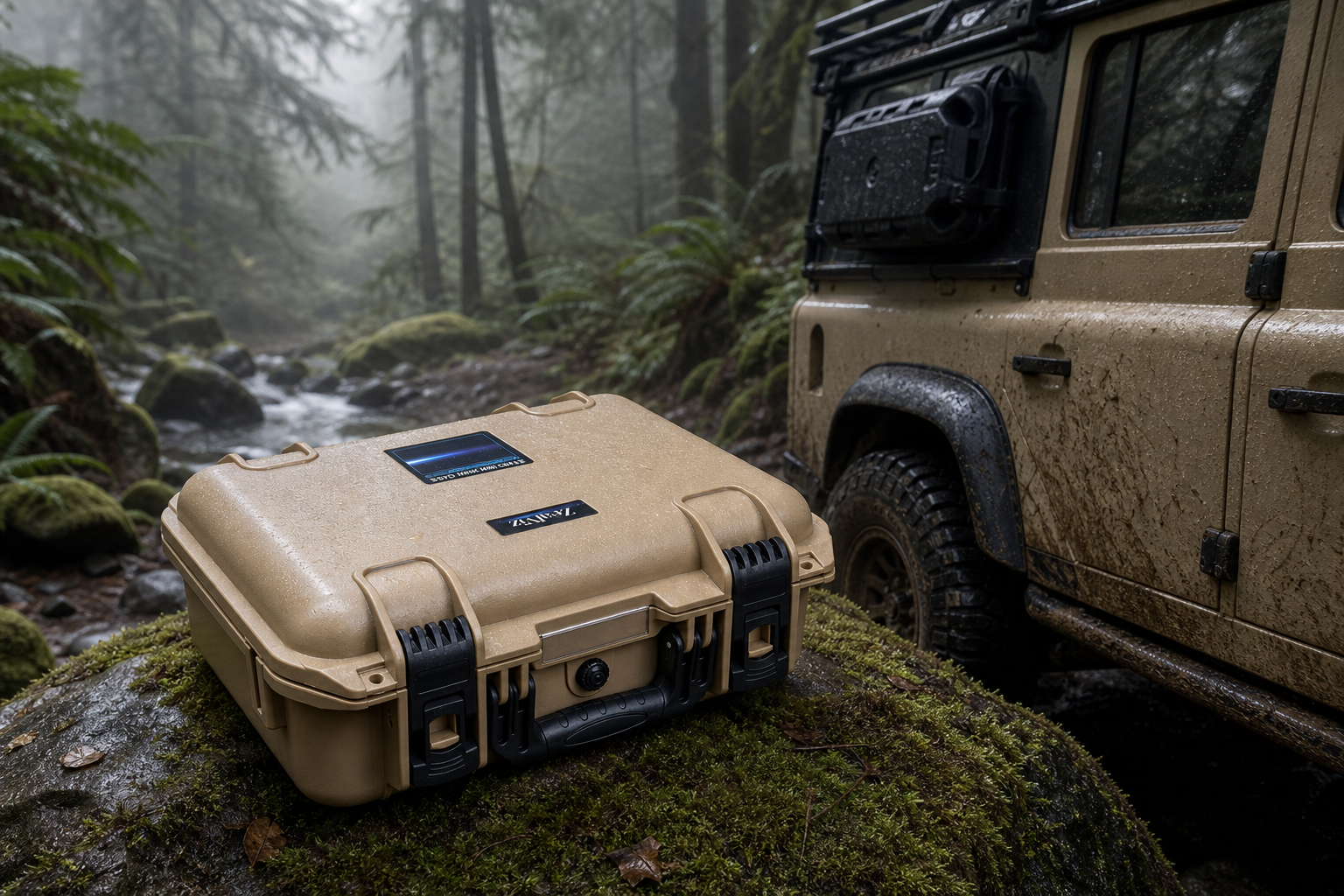
What truly sets a premium case apart is what lies inside. The Zealviz Starlink Mini Case features precision-cut, high-density foam. Unlike generic “pluck-and-pull” foam that degrades over time and leaves messy residue, a custom-cut foam insert cradles the dish, the router, and the cables in their own designated compartments. This means that even during extreme off-road vibrations, the components do not grind against each other. The foam acts as a shock absorber, dissipating kinetic energy before it can reach the sensitive phased-array surface of your antenna.
Essential Features to Look for in a Protective Hard Case
When you are evaluating starlink antenna accessories for transport, you must look beyond basic aesthetics. A truly protective case must possess a specific set of engineered features to guarantee the safety of your gear in unpredictable environments. Here is a breakdown of what you should demand from your transport solution:
- Crushproof Exterior Shell: The outer body must be rigid enough to act as a shield. Materials like polypropylene or engineered ABS plastics are ideal because they offer a high strength-to-weight ratio, ensuring the case is tough without being impossibly heavy to carry.
- Custom-Molded Interior: As seen in the Zealviz Starlink Mini Case, the interior foam must be exactly contoured to the device. Any empty space allows for movement, and movement leads to damage.
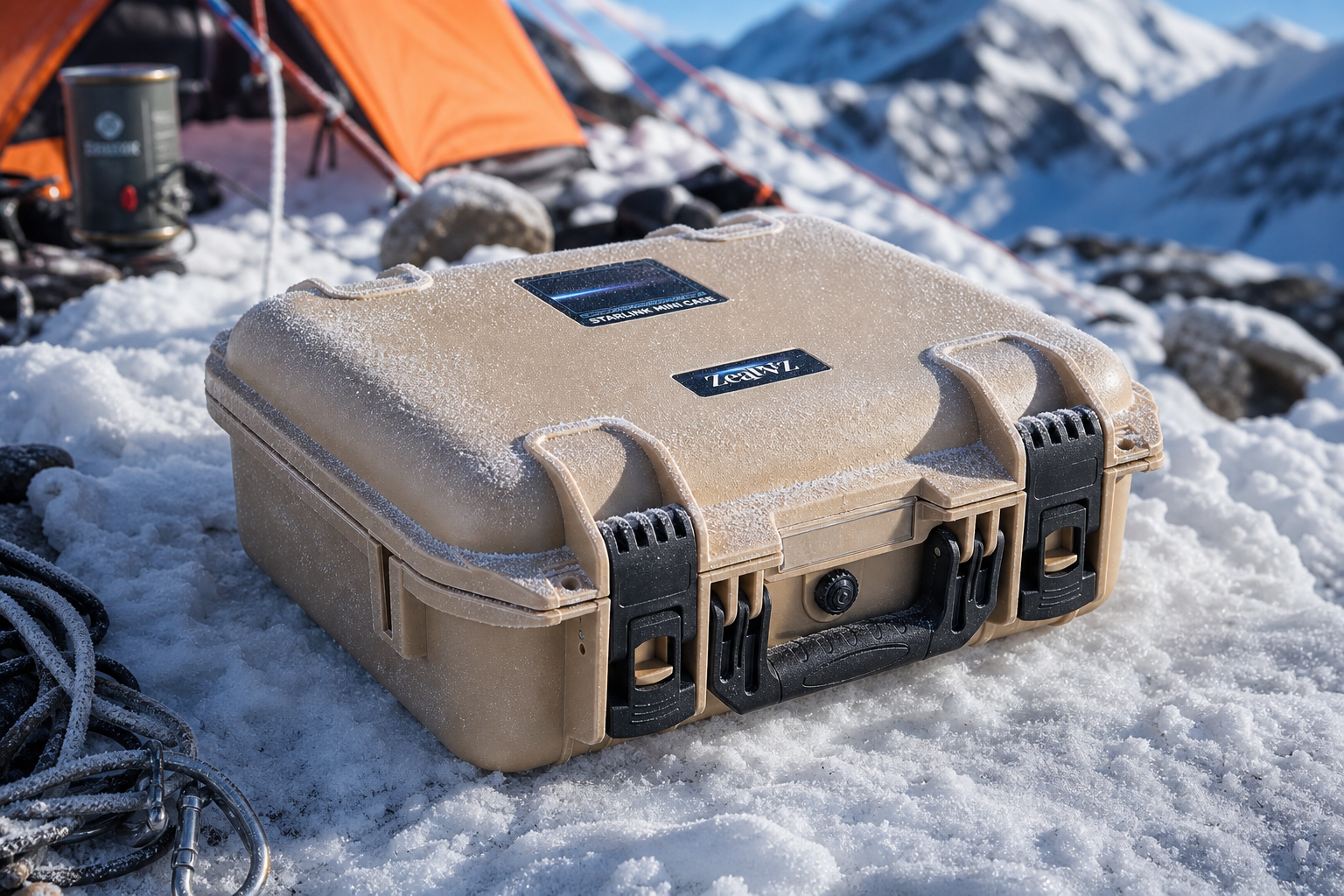
- Weatherproof O-Ring Seal: A high-quality rubber O-ring running along the perimeter of the lid is essential. When the case is latched shut, this seal compresses to form a watertight and dustproof barrier, protecting your gear from torrential rain, snow, and desert sand.
- Secure Locking Mechanisms: Dual-throw latches or heavy-duty snap locks prevent the case from accidentally springing open upon impact. Padlock holes reinforced with stainless steel are also a must-have for deterring theft when your gear is left unattended.
- Ergonomic Portability: A comfortable, rubberized handle makes a significant difference when you are carrying your setup long distances from your vehicle to your ideal setup location.
Mounting Solutions: Securing Your Connection Anywhere
Once you have safely transported your gear to your destination using a reliable case, the next challenge is deployment. Placing your dish directly on the ground is rarely optimal. Ground placement makes the unit vulnerable to wildlife, accidental foot traffic, flooding, and most importantly, signal obstruction from trees, vehicles, and buildings. To achieve the blazing fast speeds you expect, the dish requires a clear, unobstructed view of the sky.
This is where specialized mounting accessories come into play. Depending on your lifestyle, your mounting needs will vary significantly:
- RV and Van Roof Mounts: For the nomadic traveler, a permanent or semi-permanent roof mount is ideal. These mounts often utilize strong neodymium magnets or heavy-duty suction cups combined with VHB tape, allowing you to secure the dish to the roof of your vehicle without drilling holes. This keeps the dish elevated above ground-level obstructions and safe from theft.
- Pole Mount Adapters: If you are setting up at a cabin or a long-term campsite, getting the dish high into the air is crucial for clearing the tree canopy. Pole mounts allow you to attach the dish to existing structures, flagpoles, or telescoping mast systems.
- Quick-Release Tripods: For those who move frequently, a heavy-duty, wide-stance tripod offers a great balance between elevation and portability. Look for tripods with staking holes in the feet so you can anchor them securely against high winds.
Power Management and Cable Routing
Beyond the physical protection and mounting of the dish, managing your power supply and cables is a critical aspect of your overall setup. The proprietary cables provided with satellite internet systems are often thick and robust, but they are not invincible. Pinching a cable in a car door or running it over with a vehicle can sever the internal wires, rendering your entire system useless.
Investing in cable management accessories, such as weather-resistant cable pass-throughs for your RV or heavy-duty rubber floor cord covers for campsite use, will protect your lifeline to the internet. Additionally, because you will likely be operating off-grid, ensuring a clean power supply is vital. Satellite routers require stable electricity. Utilizing a high-quality pure sine wave inverter or portable power station ensures that your sensitive networking equipment receives clean, consistent power without the dangerous voltage spikes that can occur with cheaper power solutions.
Accessory Selection Guide: Building Your Perfect Setup
To help you structure your gear acquisition, we have compiled a matrix of the core accessories every remote internet user should consider. Building a comprehensive kit ensures you are never caught off guard.
| Accessory Category | Primary Function | Ideal User Scenario | Top Recommendation Feature |
|---|---|---|---|
| Hard Transport Case | Impact, dust, and water protection during transit. | Overlanders, frequent flyers, digital nomads. | Custom EVA foam, pressure relief valve. |
| Magnetic Roof Mount | Elevated, secure placement on vehicles without drilling. | Van lifers, RV owners, mobile command centers. | Rubber-coated neodymium magnets to prevent scratching. |
| Telescoping Pole | Clearing tree canopies and ground obstructions. | Cabin owners, forested campsite visitors. | Anodized aluminum for rust resistance and lightweight carrying. |
| Cable Pass-Through | Routing cables safely into a vehicle or building. | Anyone running cables through windows or bulkheads. | Weather-tight silicone gaskets to prevent drafts and leaks. |
Maximizing Your Off-Grid Experience
The true joy of satellite internet is the absolute freedom it provides. You can wake up to a sunrise over the Grand Canyon, log into your morning video conference flawlessly, and spend your evening streaming movies under the stars. However, this seamless experience is entirely dependent on the reliability of your hardware.
By treating your satellite dish with the same care you would give to a high-end camera or a professional drone, you guarantee its longevity. Starting your setup with a foundational piece of protective gear like the Zealviz Starlink Mini Case ensures that the most critical phase of your journey—getting from point A to point B—is worry-free. When you arrive at your destination, you can simply unlatch the case, deploy your mounting hardware, and connect to the world in minutes, knowing your equipment is in pristine condition.
Remember that the environment is unpredictable. Sudden hail storms, high winds, and dusty trails are part of the adventure. Your starlink antenna accessories are the armor that allows your technology to survive and thrive in these harsh conditions. Do not let a preventable accident ruin your connectivity and your trip.
Frequently Asked Questions (FAQ)
Can I leave my satellite dish outside in extreme weather?
While the dishes are designed to be weather-resistant and can handle rain and snow, extreme conditions like large hail or hurricane-force winds can cause physical damage. If severe weather is forecasted, it is highly recommended to stow the dish safely in a protective hard case until the storm passes.
Will a standard generic tool case work for transporting my setup?
Using a generic case is risky. Standard cases lack the precise, custom-cut foam required to keep the dish and router from shifting. The Zealviz Starlink Mini Case is specifically engineered to cradle the exact dimensions of the hardware, preventing internal collisions and absorbing shock far better than generic foam.
How do I safely transport my dish on an airplane?
To fly with your dish, you must use a rugged, crushproof hard case. Soft bags will not survive the cargo hold, and even as a carry-on, overhead bins pose a crushing risk. Ensure your hard case has secure latches and pressure equalization valves to handle changes in cabin altitude, and consider using TSA-approved padlocks for added security.
Do I really need a specialized mount, or can I just set it on the picnic table?
While setting it on a table works in a pinch, it leaves the dish vulnerable to being knocked over by people, pets, or wind. Furthermore, a proper mount elevates the dish, significantly reducing signal obstructions from surrounding objects and ensuring a much faster, more stable internet connection.
Conclusion
Taking your connectivity off the grid is an empowering experience, but it requires the right preparation. Your satellite dish is a premium piece of technology that demands premium protection. From the moment you pack up your gear to the moment you lock onto a signal in the wilderness, the right starlink antenna accessories are what stand between a flawless internet connection and a frustrating hardware failure. By investing in a rugged, custom-fitted transport solution, robust mounting hardware, and proper cable management, you are not just buying accessories; you are buying peace of mind. Equip yourself properly, protect your investment, and enjoy the ultimate freedom of reliable connectivity wherever the road takes you.